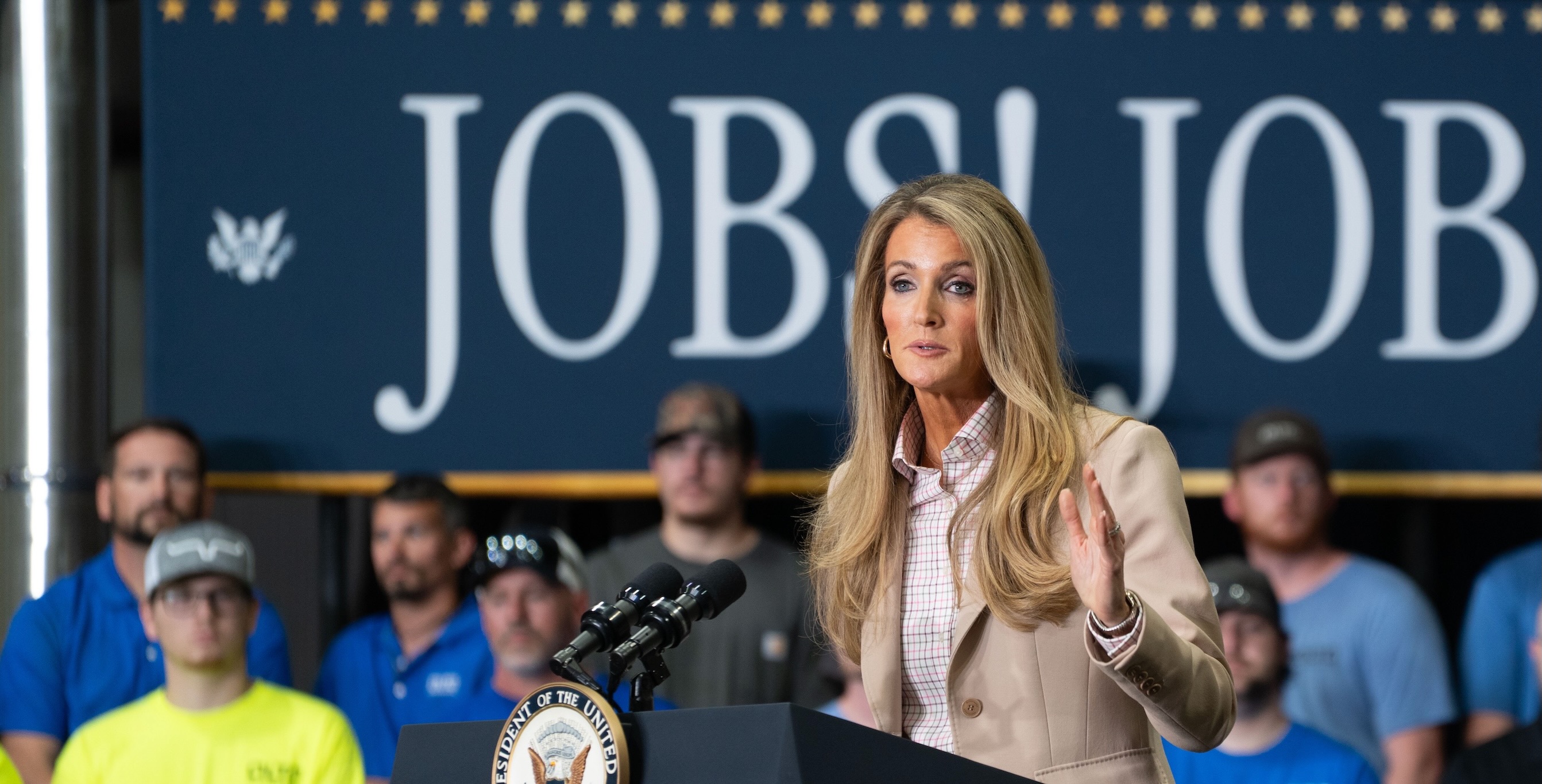
Kelly Loeffler speaking with small business owners

Making Main Street Great Again

Administrator Kelly Loeffler has worked to advance President Trump’s America First agenda to empower small businesses across the country, restoring job creation, growth, and investment on Main Street U.S.A.

Download the Full 2025 Annual Report

Administrator's Message

"After four tough years, 2025 marked Main Street’s comeback because President Trump knows that small business is big business for America. It's why the Trump SBA prioritized capital access, deregulation, and Made in the USA - and helped generate all-time records for small business formation, confidence, and capital delivery. Thanks to the Trump economic agenda – including tax cuts, deregulation, and fair trade, job creators are spring-loaded for another historic year in 2026."

Administrator Kelly Loeffler U.S. Small Business Administration

FIGHTING FOR MAIN STREET

SBA's achievements for America's small business community in 2025

  • Delivered the most capital in SBA history, guaranteeing $45 billion in 7(a) and 504 loans to more than 85,000 small businesses in FY25—while restoring lender fees and underwriting standards to protect taxpayers and ensure long-term program solvency.
  • Rebuilt confidence in SBA lending by restoring program integrity, repealing Biden-era underwriting failures, relaunching the Franchise Directory, and reinstating clear eligibility standards that stabilized cash flow and reversed rising default and delinquency trends.
  • Delivered a disciplined, fully funded disaster response, approving $6.45 billion in disaster assistance for 51,700 survivors, while maintaining sufficient lending authority to avoid program shutdowns.
  • Mobilized record private investment through SBA’s investment programs, closing FY25 with a $53 billion SBIC portfolio and approving new licenses and green-light letters projected to drive tens of billions in future investment.
  • Strengthened innovation and commercialization, with more than 1,600 SBIR-funded firms reporting nearly $29 billion in commercialization activity, translating federally supported research into deployable technologies and real-world economic impact.
  • Launched the Made in America Manufacturing Initiative, reorienting SBA programs, staffing, and advocacy to rebuild domestic production, strengthen supply chains, and position small manufacturers at the center of America’s reindustrialization strategy.
  • Introduced the Manufacturer’s Access to Revolving Credit (MARC)—the first SBA loan product dedicated exclusively to manufacturers—expanding working capital access for small producers and supporting early-stage onshoring and expansion.
  • Eliminated lender fees for manufacturers beginning in FY26 and advanced the Made in America Manufacturing Financing Act, which would double SBA manufacturing loan limits from $5 million to $10 million to meet the scale of modern industrial investment.
  • Launched the Make Onshoring Great Again (MOGA) Portal, connecting small manufacturers with more than one million domestic suppliers and recording over 35,000 user sessions as businesses moved production back to the United States.
  • Advanced President Trump’s One Big Beautiful Bill, delivering permanent tax relief for small businesses, 100% bonus depreciation for American factories and equipment, fair-trade enforcement, and incentives that drove historic public- and private-sector commitments to build in America.
  • Right-sized the SBA after years of bureaucratic expansion, reducing the workforce by over 50 percent, ending remote-work excesses, and returning the agency to a lean, field-focused operating model.
  • Cut wasteful spending and overhead, terminating or pausing more than 120 contracts, consolidating nearly half of SBA leases, and reducing the agency’s operating budget by 33 percent or $307 million.
  • Centralized fraud detection and enforcement, establishing a dedicated SBA Fraud Task Force in coordination with the Office of Inspector General and expanding interagency data-sharing with DHS and Treasury to proactively identify criminal activity before funds are disbursed.
  • Launched a historic audit of the 8(a) Business Development Program, reviewing 15 years of contracting activity and ordering all 4,300 active 8(a) contractors to submit multi-year financial records to identify pass-through abuse, shell companies, and contractor misconduct.
  • Cracked down on pandemic-era fraud and expanded enforcement nationwide, suspending 6,900 borrowers tied to $400 million in fraudulent PPP and EIDL loans, issuing nearly 1,000 SVOG demand letters, and expanding loan reviews from Minnesota to all 50 states, with referrals for prosecution and recovery of stolen taxpayer dollars.
  • Launched the SBA Red Tape Hotline, creating a direct channel for small businesses to report burdensome, duplicative, and costly regulations—driving 35 formal comment letters, 25 regulatory roundtables, and hundreds of deregulatory referrals across the federal government.
  • Identified regulatory reforms generating more than $110 billion in cost savings, elevating over 300 small-business-driven deregulatory actions to federal agencies based on real-world feedback from job creators.
  • Delivered targeted regulatory rollbacks with immediate cost savings, reversing Biden-era rules that drove up operating costs for farmers, truckers, manufacturers, and small transportation businesses—cutting hundreds of millions in unnecessary compliance burdens.
  • Launched SBA’s Deregulation Strike Force, leading the Trump Administration’s effort to eliminate Biden-era regulations that raised prices and restricted supply in energy, manufacturing, housing, transportation, agriculture, and financial services.
  • Ended discriminatory and partisan regulatory practices, terminating DEI-driven programs, restoring statutory contracting goals, protecting religious liberty in disaster lending, and enforcing fair access to banking for eligible American small businesses.
  • Ended DEI-driven bureaucracy at the SBA, abolishing the Office of Diversity, Equity, Inclusion, and Accessibility, canceling DEI-goaled grants, and restoring a merit-based approach to serving America’s small businesses.
  • Put American citizens first by relocating SBA offices out of sanctuary cities, beginning the process of moving regional and district offices from jurisdictions that refuse to cooperate with federal immigration enforcement.
  • Ended partisan misuse of SBA resources, terminating voter registration agreements and other political initiatives that diverted agency staff and funding away from SBA’s statutory mission.
  • Restored religious liberty and equal access to disaster assistance, eliminating Biden-era rules that unlawfully excluded faith-based organizations from SBA loan programs and establishing the SBA Office of Faith.
  • Protected small businesses from politicized debanking, directing SBA lenders to identify and remediate discriminatory banking practices and ensure eligible businesses are not denied financial services based on political or religious beliefs